Six Months From Now, Someone Will Read This at 2 A.M.: Engineering Release Notes for the Incident, Not the Announcement
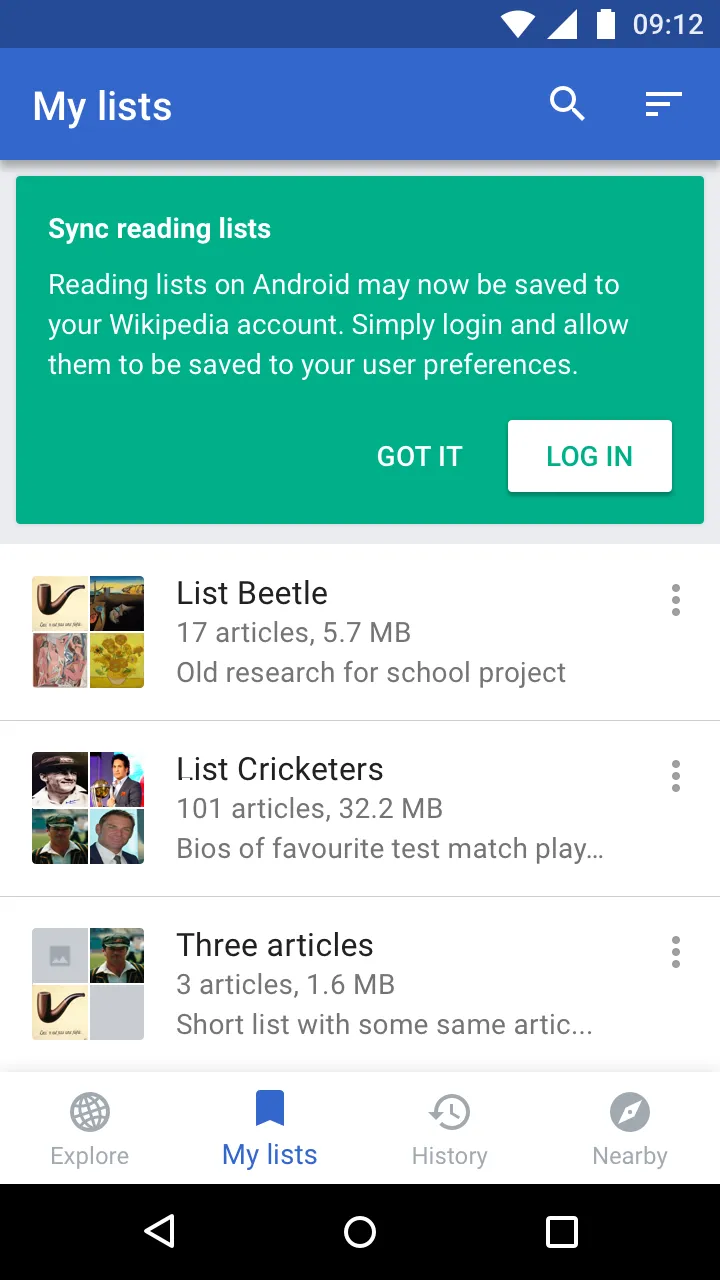
Photo: Rita Ho, Wikimedia developers, and the contributors of the English Wikipedia, CC BY-SA 4.0, via Wikimedia Commons
There is a specific moment when your release notes matter most, and it is almost never the moment you write them. It is six months later, on a Tuesday night, when an on-call engineer at a company you have never heard of is staring at a failing deploy and grepping your changelog for a clue. What they find — or fail to find — determines whether they roll back, patch around you, or open an angry issue at the worst possible hour.
The uncomfortable truth is that most open-source projects spend more design attention on their landing page badges than on the document that production users actually consult when something breaks.
The True Cost of 'Bug Fixes and Improvements'
The phrase "bug fixes and improvements" is the release-note equivalent of a shrug. It communicates nothing, but worse, it implies the maintainer considered the details not worth the reader's time. For a hobbyist, that shrug is an annoyance. For a DevOps team running your library across two hundred services, it is a risk signal.
Vague entries force downstream teams into defensive behavior: pinning old versions indefinitely, maintaining private forks of upstream patches, or writing their own diff-audit scripts to reverse-engineer what changed. Every one of those behaviors is a tax on adoption that never shows up in your star count but absolutely shows up in your issue tracker.
There is also a trust dimension. When an operator cannot tell whether version 4.7.1 contains a security patch or a typo fix, they must assume the worst and schedule a full regression cycle. Precise notes let them triage. Ambiguous ones make your release expensive by default.
Notes Are an Interface, Not a Diary
The mental model worth adopting is this: release notes are a user interface, and like any interface, they have users with distinct jobs. The developer upgrading today wants the migration steps. The auditor next quarter wants provenance. The on-call engineer at 2 A.M. wants to know exactly what behavior changed and whether it could plausibly explain the anomaly in front of them.
Most changelogs are written for the first reader and ignore the other two entirely.
A Schema That Survives the Incident
A structured entry does not need to be long. It needs to be answerable. Consider a template with four fields per change:
- What changed, stated as observable behavior, not implementation. "Retry logic now respects
Retry-Afterheaders" beats "refactored HTTP client internals." - Who it affects, scoped by usage pattern. "Only relevant if you use the streaming API" saves most readers a click.
- What to do, if anything. Migration steps, feature flags, or the explicit statement "no action required."
- Where it came from, with an issue or PR link. Provenance is how a reader six months from now reconstructs context you have long forgotten.
Breaking changes deserve a fifth field: the reason. Engineers accept breakage far more gracefully when the trade-off is explained than when a major bump appears to be vandalism.
Writing for the Reader You Will Never Meet
The discipline here is the same one technical writers apply to documentation: assume no shared context, no access to the team's memory, and no patience. Write the entry, then ask one question of it — if I read this during an outage, would it change my next action? If the answer is no, the entry is decoration.
Tooling helps, but only culture sustains it. Commit-message conventions, automated changelog generation, and release-PR templates all reduce friction. What they cannot do is decide that the details matter. That decision is the maintainer's, and it is cheap: an extra fifteen minutes per release, spent on behalf of every operator who will ever depend on your work in the dark.