Your Commit History Is Talking: What Recruiters Actually Read on a GitHub Profile
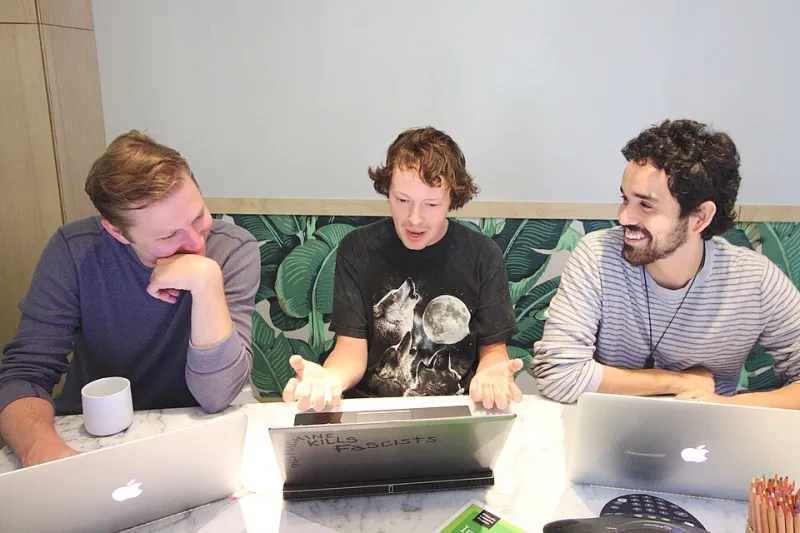
Photo: Wiki Education Foundation, CC BY-SA 4.0, via Wikimedia Commons
The cover letter died quietly. What replaced it wasn't LinkedIn, exactly, and it wasn't the personal website with the serif font and the rotating project carousel. It was a URL most engineers never intended as a portfolio in the first place: github.com/yourname.
In the US hiring pipeline, that profile now functions as a first-round interview. Recruiters at startups and large enterprises alike admit to skimming it before a phone screen — sometimes before reading the résumé at all. And unlike a résumé, which is a curated artifact, a GitHub profile is a working ledger. It can't help but tell the truth, or at least a version of it.
The Pinned Repository as a Thesis Statement
Ask hiring managers what they look at first and the answer is nearly universal: the pinned repos. Six slots, six arguments. A profile that pins half-finished tutorials or a fork of a popular framework with zero changes sends a specific message, and it isn't the one the candidate intended.
"I'm not looking for stars or follower counts," says a hiring manager at a mid-size fintech company in Chicago, who asked not to be named because her company doesn't formally sanction profile screening. "I'm looking for whether the README tells me what the thing does, whether there's a license, whether the commit messages suggest a human who works with other humans."
That last point matters more than most candidates realize. A repository with coherent commit history — small, described, incremental changes — reads like evidence of professional habits. A single commit titled "initial commit" containing three thousand lines reads like a portfolio uploaded the night before the application deadline. Sometimes that's exactly what it is.
Cadence, and the Myth of the Green Wall
The contribution graph — the green wall — has taken on outsized psychological weight. Engineers describe anxiety about vacation weeks rendering as blank white squares. Some purchase automated commit services to keep the grid green.
Hiring managers, for their part, are more skeptical of the graph than the people staring at it. Most will tell you they can't distinguish a genuine contribution from an automated one, so they discount it almost entirely. What they look at instead is where the contributions land. A pull request merged into a dependency the company actually uses carries more weight than a hundred commits to a personal project nobody has cloned.
The honest read of the cadence question is this: consistency signals discipline, but a bursty history around a day job, a degree, or a family is not a red flag to anyone who has ever held one of those. The profile is a signal, not a verdict.
Issue Etiquette: The Unwritten Interview
Where the evaluation gets granular is in the issues and pull request comments. How a developer behaves in someone else's repository — asking questions after searching for duplicates, providing minimal reproducers, thanking maintainers, accepting review feedback without argument — is behavior under observation. It is, functionally, a work sample.
A senior engineer at a Boston-based infrastructure company puts it bluntly: "If I see someone filing an issue that says 'this doesn't work, fix it,' I've learned everything I need to know. If I see someone post a repro script, a version number, and a workaround they found, that's a referral-level signal."
The inverse stories exist too. Candidates have reported withdrawn offers after hiring teams dug through hostile issue threads from years earlier — arguments with maintainers, dismissive comments, a pattern of closing their own bug reports when the fix turned out to be their own mistake. Public history has a long memory and no edit button for tone.
When the Portfolio Lies
The system has failure modes, and they're worth naming. Contribution history rewards work that is visible and penalizes work that is not. The engineer who spent two years modernizing a proprietary codebase under NDA has nothing to show. The engineer who spent two weeks shipping a flashy visualization library has a beautiful pinned repo. Hiring on public history systematically undervalues the first candidate.
There's also a demographics problem. Time for open-source contribution correlates with disposable time, which correlates with everything disposable time correlates with. Several companies have formally discouraged profile screening for exactly this reason; others do it anyway, informally, in the gap between application and screen.
What To Do With This
For engineers on the US job market, the practical guidance is unglamorous. Pin three repositories you'd be comfortable defending in an interview, and write their READMEs as if a stranger with ten minutes will read them — because one will. Contribute to tools you actually use, where your issue comments demonstrate judgment rather than volume. Treat every public comment as a writing sample, because it is one.
For hiring teams, the better practice is to treat the profile as one input among many — a source of talking points for the interview, not a filter applied before it. Ask candidates to walk through a pinned repository. The conversation that follows will tell you more than the green wall ever could.
The open-source portfolio is here to stay. Whether it evaluates engineers fairly depends entirely on how carefully it's read.